
HappyFleet’s Questionnaire stage is a step in your Applicant Tracking System (ATS) pipeline that puts a form you design in front of every candidate, collects their answers in one submission, and decides what happens next based on rules you set: the application either advances automatically or lands in your review queue with a plain-language reason attached. The recruiter’s job shifts from reading every application to reading only the ones the rules flagged. In HappyFleet, the Questionnaire stage supports the question formats hiring teams actually need, shows follow-up questions only when they apply, and routes flagged submissions to a person for a decision without ever auto-rejecting anyone. For large organizations filling frontline roles across many locations, that combination is what turns a pile of applications into a short list of decisions.
What is a questionnaire stage, and where does it fit in a hiring pipeline?
A questionnaire stage is a pipeline step where the application pauses until the candidate completes a form, then moves forward or into review based on their answers. It usually sits right after the application comes in, before anyone on the team spends time on a phone call or an interview.
Most hiring teams already ask the same handful of qualifying questions on every call: Do you have a valid driver’s license? Can you work weekends? Are you authorized to work in this country? Asking those questions by phone means a recruiter’s time is the gate, and the gate closes when the recruiter goes home. A questionnaire stage moves those questions in front of the candidate the moment they apply, at any hour, and records the answers against their application. In HappyFleet, the stage is one of several building blocks in a job’s workflow, alongside the AI Phone Screen stage, the Scheduling stage, and the Signature / Form Fill stage, so a team can put a questionnaire wherever it makes sense: as a first filter, as a follow-up after a screen, or as a data-collection step before onboarding.
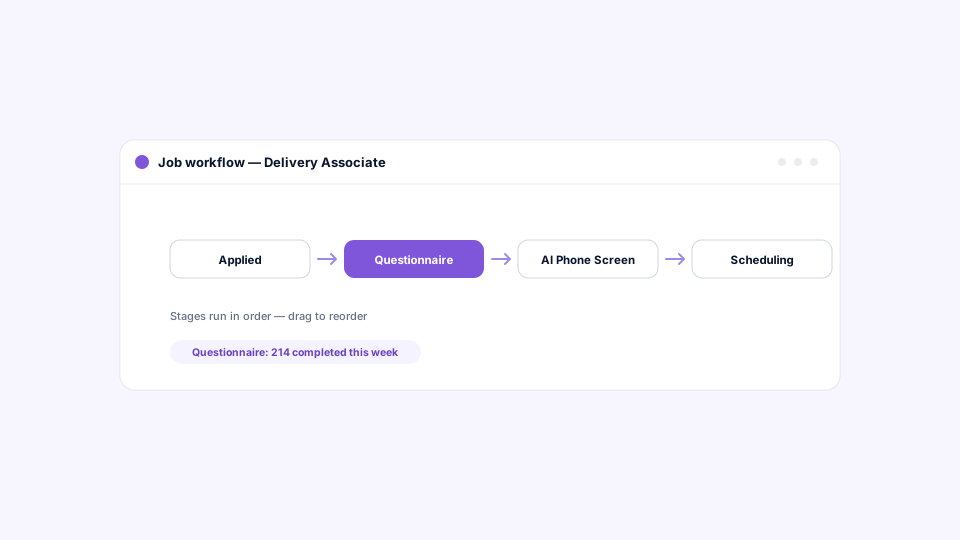
What kinds of questions can a questionnaire stage ask?
HappyFleet’s Questionnaire stage supports single-choice, multi-select, numeric, and free-text questions, each with a label, an optional description, and a required or optional setting. You can also add an intro above the form to set expectations before the candidate starts.
The mix matters because different questions need different answers. Single-choice questions force a clean, comparable answer, which is what you want for eligibility questions like shift availability or certification status. Multi-select handles questions where several answers can be true at once, such as which days someone can work or which equipment they have experience with. Numeric questions capture things like years of experience or distance from the site in a format your rules can compare against. Free text leaves room for the answers that don’t fit a list, like a brief note on relevant experience. The intro is where you explain what the role involves or remind a candidate to have a document handy, so the form feels like part of a conversation rather than a test.
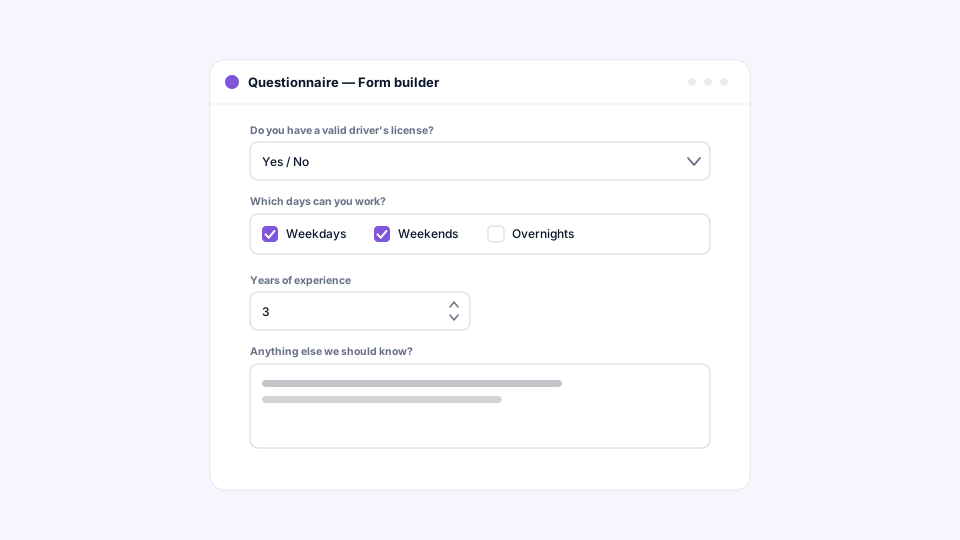
How does conditional logic keep the form short for each candidate?
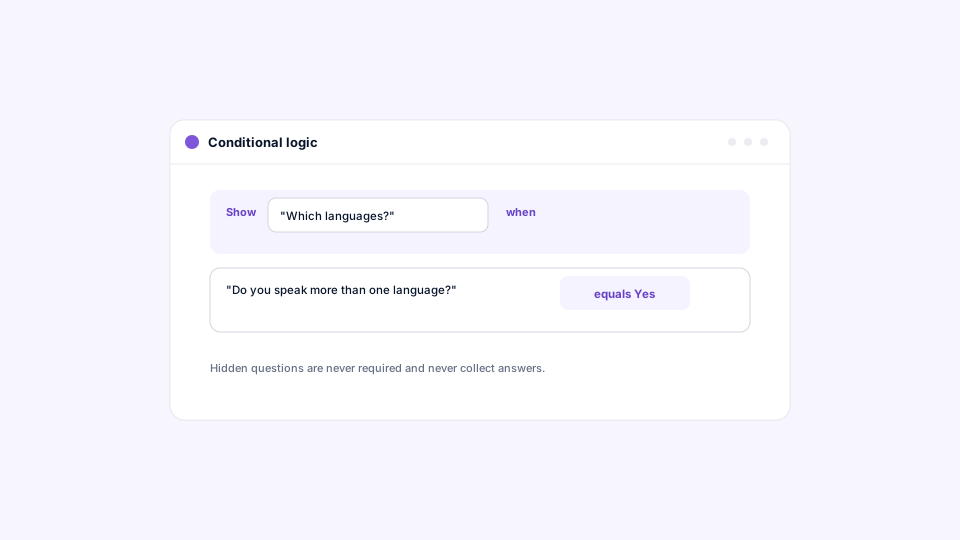
Conditional logic lets a question appear only when earlier answers call for it, so each candidate sees the questions that apply to them and nothing else. Ask “Do you speak more than one language?” and the follow-up “Which languages?” only shows up for people who said yes.
For high-volume hiring, this is the difference between a form candidates finish on their phone and one they abandon. A warehouse role might need forklift certification details from some applicants and not others; a driving role might need license class information only from candidates who indicated they hold a commercial license. Rather than showing everyone every question, the form branches. HappyFleet keeps that branching predictable: conditions flow from earlier questions to later ones, can be combined so that all or any of several conditions apply, and hidden questions are never required and never collect stray answers. Candidates get a shorter form, and your team gets cleaner data.
How do review rules decide who advances and who gets a second look?
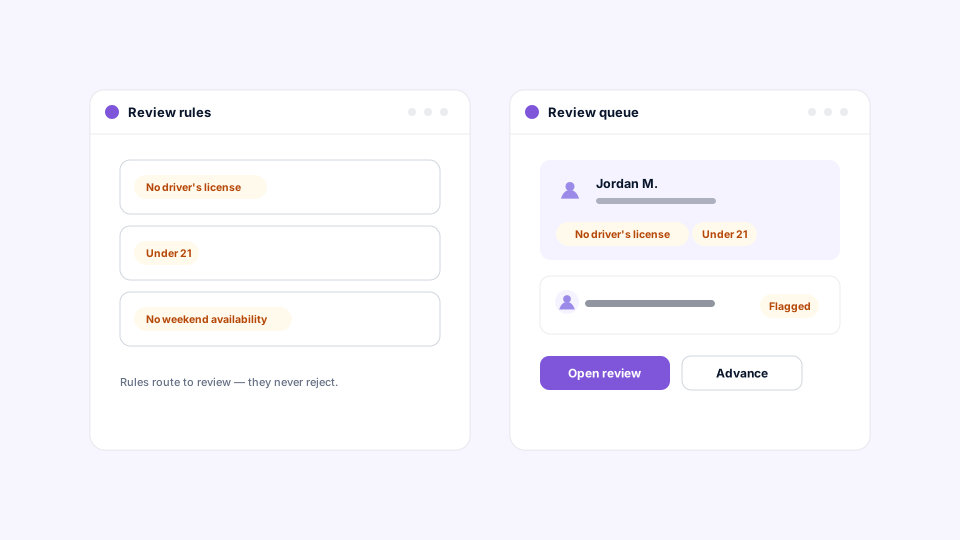
Review rules run against every submission and route matching applications to your review queue instead of letting them advance, with a label that tells you exactly why. A rule labeled “No driver’s license” means every candidate who answers that way waits for a person, while everyone else moves on automatically.
Each rule carries its own label, and when a submission trips more than one, all of the matching labels appear together. A reviewer opening the application sees “No driver’s license” and “Under 21” side by side and can make one informed decision instead of re-reading the form to figure out what was wrong. This is the core of what a questionnaire stage does for a lean recruiting team: the rules handle the sorting, and people handle the judgment calls.
The design choice that matters most here is that review rules only ever escalate. They never reject. A candidate who trips a rule isn’t turned away by software; they’re queued for a human who can look at the full picture, including context the form couldn’t capture. That keeps rejection a human decision, which is both better for candidates and easier to defend later, a theme covered in more depth in how an ATS supports compliance, reporting, and audit trails.
What does the candidate actually experience?
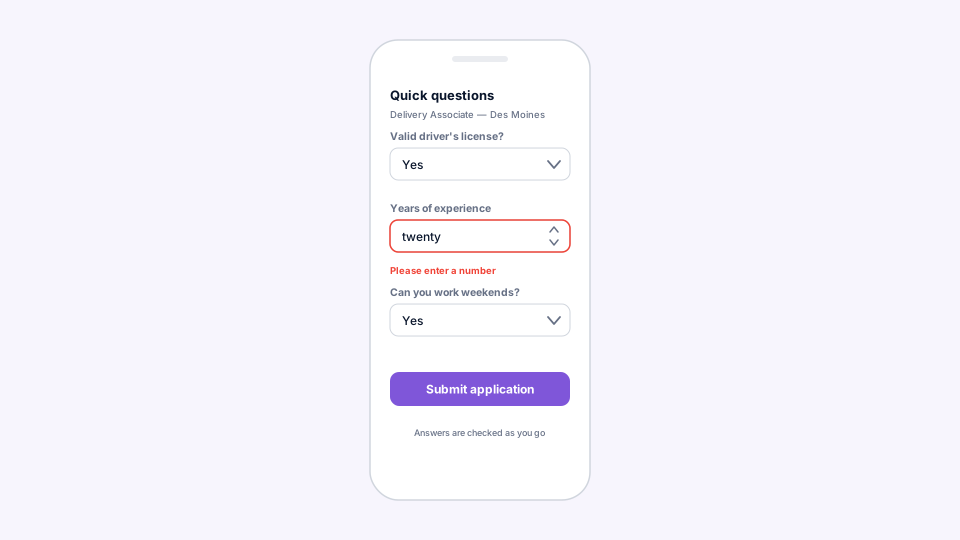
The candidate sees a single form, fills it out, submits it once, and either moves forward immediately or waits for review, with no partial submissions and no back-and-forth. Answers are checked as they go, so a mistyped number or a missed required field is flagged on the spot rather than after a failed submission.
Once the submission is accepted, the outcome is instant: if no review rule matched, the application advances and the candidate hears about the next step through the stage’s automated notifications; if a rule matched, the application waits in your queue with the reasons attached.
The form a candidate sees is the form that’s saved with their answers. Editing the workflow later never changes what someone already submitted, so what you review is always what they actually saw and answered, which sounds like a small detail until the first time you need to explain a hiring decision from three months ago.
Why does a questionnaire stage matter more at high volume?
At high volume, the questionnaire stage is what keeps application volume from turning into recruiter workload, because sorting happens before anyone on the team opens a file. Fifty applications or five hundred, the rules run the same way on every one.
Consider what this replaces. Rafael Garcia, who built Gallo Logistics into a 35-route Amazon Delivery Service Partner operation in Florida, found that manually screening 50 candidates took his team more than 25 hours before he automated the process with HappyFleet, and his second-round interview show rate sat at roughly 10 to 15 percent. After automating screening, that show rate rose to 76 percent, as described in his case study. A questionnaire stage attacks the same problem from the front of the pipeline: instead of a recruiter spending half an hour per candidate discovering that someone doesn’t have the required license, the form captures that answer in the first two minutes and routes the application accordingly. For organizations hiring across many sites, the same questionnaire can sit on every location’s job, which is part of what makes multi-location hiring consistent without asking each site to build its own process.
How is this different from application questions in a traditional ATS?
A traditional ATS usually offers screening questions that collect answers but leave the decision to a recruiter, or knockout questions that auto-reject with no human in the loop. A questionnaire stage with review rules sits between those two extremes: it sorts automatically but escalates rather than rejects.
Knockout questions are blunt instruments. They reject candidates on a single answer with no context, which loses people who might have been a fit with a small accommodation, and they create a record of automated rejections that’s hard to explain later. Plain screening questions have the opposite problem: they gather data and then do nothing with it, so a recruiter still has to read every application to find the ones worth advancing. HappyFleet’s model keeps the automation where it’s safe, in sorting and routing, and keeps the human where it matters, in the final call. For the broader picture of where legacy tools fall short, see AI Recruiter vs. traditional ATS: what’s the difference?
Ask the right questions once, and let the rules do the sorting
HappyFleet is one platform with two connected AI products: the AI Recruiter, which conducts automated phone-screening interviews with every applicant in more than 10 languages, 24 hours a day, and produces a scored summary of fit and eligibility, and the AI ATS, which chats with candidates over text, books interviews through its own built-in scheduler, and captures candidate data automatically at every pipeline stage. The Questionnaire stage is one of the building blocks inside the AI ATS, and it pairs naturally with the AI Phone Screen: use the form to capture the hard eligibility facts, then let the AI Recruiter handle the conversation. For teams hiring frontline and hourly workers at volume, that means fewer applications to read and more time spent with the candidates who are actually a fit.