
HappyFleet’s AI Phone Screen stage is a step in your Applicant Tracking System (ATS) pipeline where the AI Recruiter calls the candidate, walks them through the role, asks the questions you’ve configured, and scores their responses, then returns a scored summary, transcript, and recording to the candidate’s profile. The stage is where you tell it what to say and what to listen for: context about your company, the job, and your benefits; yes/no screener questions to qualify candidates; open-ended interview questions scored and weighted by how much they matter to you; answers to common candidate questions; and a closing message. Score-based automation can advance anyone who meets a threshold you set, and every applicant gets the same structured interview, in more than 10 languages, 24 hours a day. For large organizations hiring frontline talent at volume, it is the difference between screening the candidates you had time to call and screening all of them.
What does an AI phone screen actually do on the call?
The AI Recruiter calls the candidate, introduces the company and the role using context you provide, asks your screener and interview questions in a structured order, answers common candidate questions from your FAQs, and closes with your outro. Every response is captured and scored, and the results appear on the candidate’s profile when the call ends.
The reason this beats a recruiter’s phone screen isn’t that it’s smarter; it’s that it’s immediate, consistent, and unlimited. A recruiting team can call the applicants it has time for, during business hours, in the languages its staff speak. The AI Recruiter calls every applicant, at any hour, in the candidate’s language, and asks each one the same questions in the same way. For the mechanics of how AI-driven screening works, see how does AI recruiting work? Adding the stage takes a moment: create a new stage, choose the AI Phone Screen type, and give it a name.
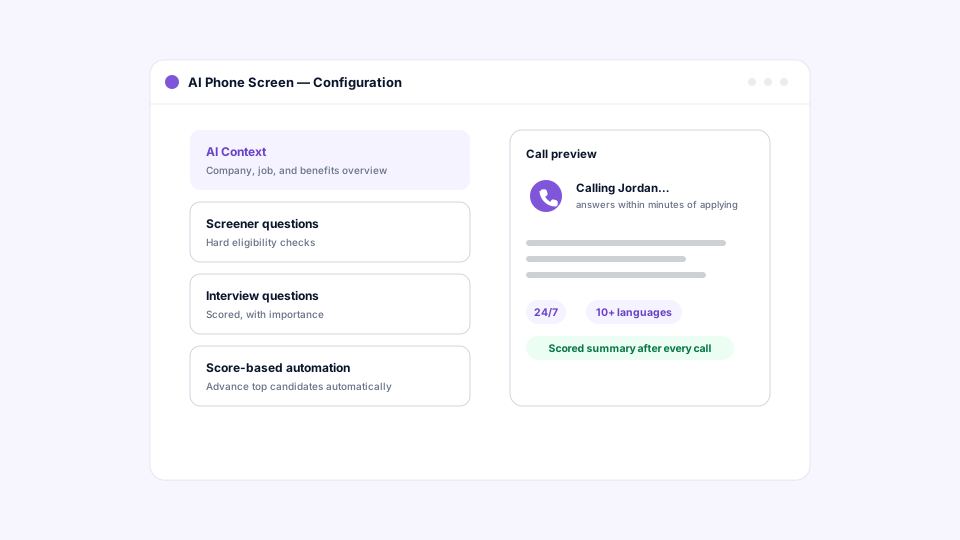
How do you give the AI interviewer context about your company and the role?
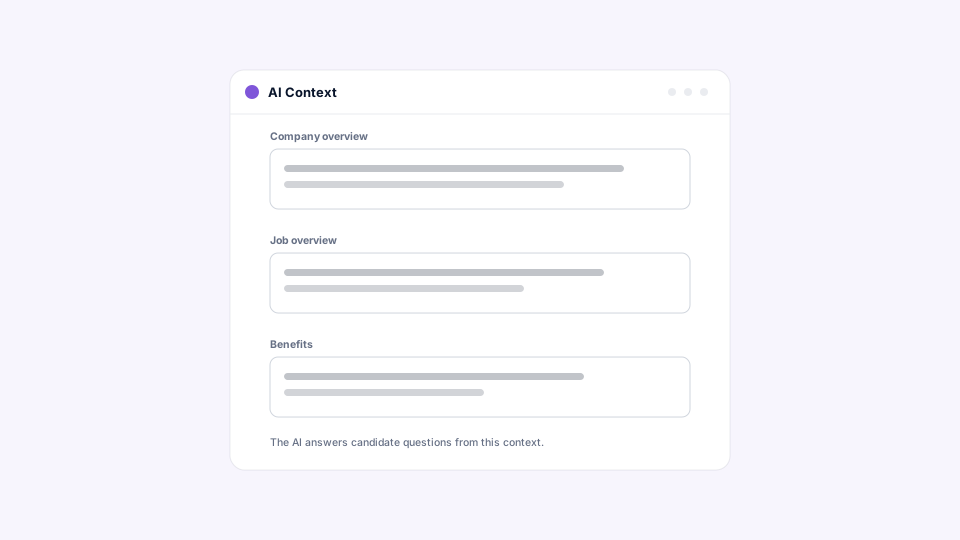
Short context fields tell the AI Recruiter what it needs to describe the role accurately and answer candidate questions: an overview of your company, a summary of the job, and the benefits you offer.
Think of these fields as the briefing you’d give a new recruiter before their first day of calls: what we do, what this job involves, what we offer. Keeping them short forces the clarity candidates actually want: the shift pattern, the pay range, the physical demands, the benefits that matter to hourly workers. A candidate who asks “Is this a set schedule or rotating?” gets a straight answer, and a candidate who asks about health coverage gets one too. FAQs extend this further, letting you add specific questions and answers so the AI Recruiter can handle the recurring ones, from parking to start dates, without escalating to a human.
What are screener questions, and how do they qualify candidates?
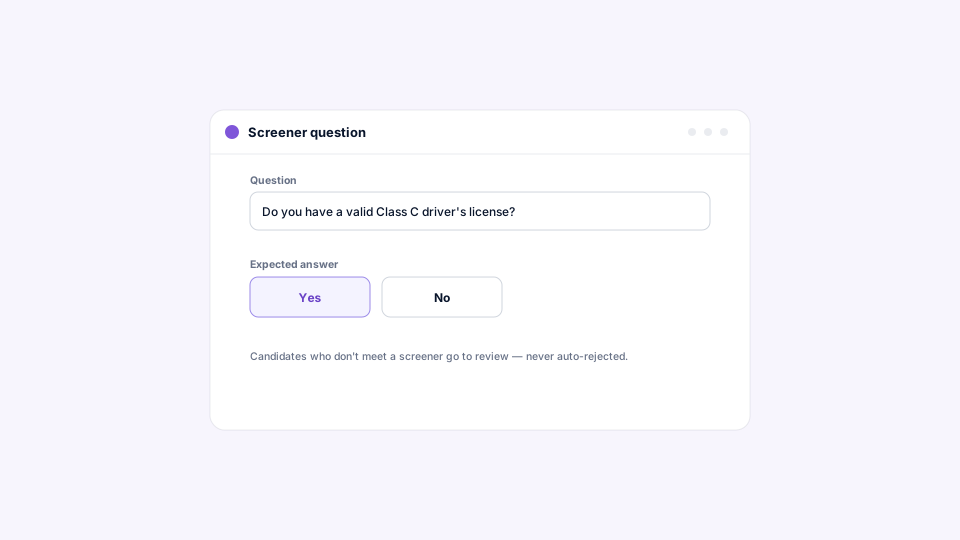
Screener questions are yes/no questions used to qualify candidates on hard requirements: a valid license, availability for the shift, authorization to work, willingness to lift a certain weight. Add as many as the role needs.
For questions where a “yes” isn’t always a clean yes, you can guide how the answer is judged. A candidate who says “I have my license but it’s suspended until next month” has technically answered yes to a license question; your guidance can make clear that a currently valid license is what counts. This is where the AI phone screen improves on the Questionnaire stage, which captures the same eligibility facts in a form: the phone screen can hear the nuance and judge it against your standard, rather than accepting a checkbox.
How are open-ended interview questions scored and weighted?
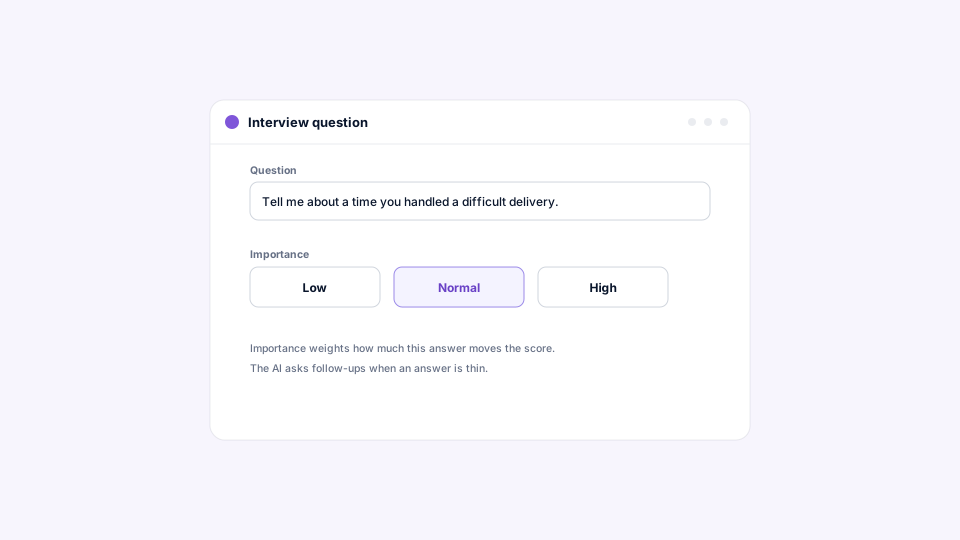
Interview questions are open-ended prompts that evaluate experience and fit. Each one is scored, and you set how much it matters, from nice-to-have to important, so the overall score reflects your priorities. You can also describe what a strong answer looks like to guide the scoring.
Weighting is what turns a list of questions into a score that means something. For a delivery driver role, “Tell me about a time you handled a difficult customer” might be important while “Have you used a handheld scanner before?” is nice to have; the overall score reflects that. Guiding the scoring keeps it aligned with what your best hiring managers listen for, so the AI Recruiter grades answers the way your team would, consistently, on every call. Because every applicant gets the same questions with the same weights, candidates are directly comparable, which is one of the compliance advantages of structured screening discussed in how an ATS supports compliance, reporting, and audit trails.
How does score-based automation advance candidates without a recruiter?
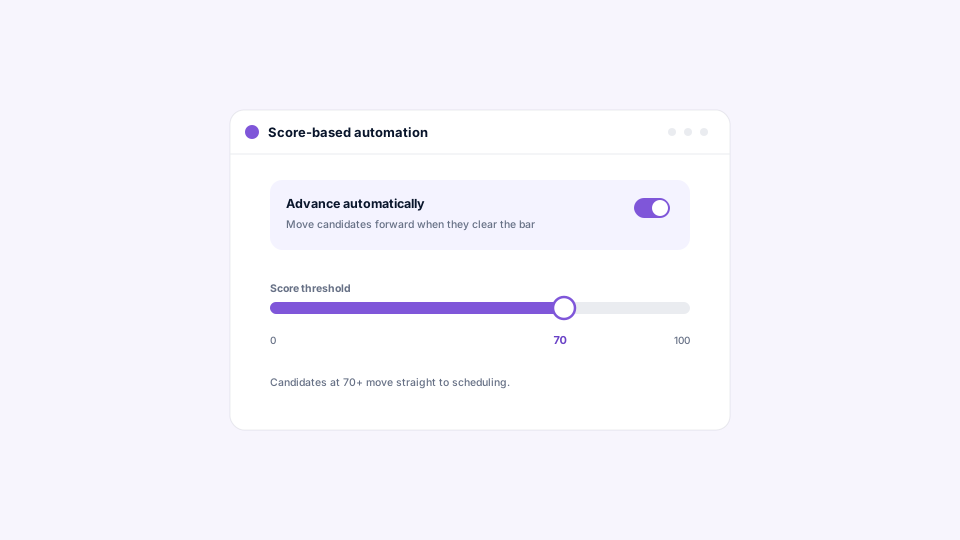
Turn on score-based automation, set a score threshold, and any candidate who meets it advances to the next stage automatically. Everyone else waits for a person to review the results.
This is the setting that lets a lean team keep pace with volume. A strong candidate moves straight to the next step, whether that’s the Scheduling stage where they book their own interview or a Signature / Form Fill stage for paperwork, while the recruiter’s attention goes to the borderline cases where judgment adds value. Rafael Garcia, who built Gallo Logistics into a 35-route Amazon Delivery Service Partner operation in Florida, saw manual screening of 50 candidates take more than 25 hours before automating with HappyFleet; afterward, his second-round interview show rate rose from roughly 10 to 15 percent to 76 percent, as told in his case study. The speed from application to a scheduled next step is a large part of that change.
What happens when a candidate says they’re not interested?
By default, a candidate who declines the role during the call is closed out, keeping the pipeline clean. You can instead choose to keep declined candidates open for HR follow-up.
The default fits most high-volume roles, where a clear “no thanks” is the end of the story. The option exists for the cases where it isn’t: a candidate who declined because of a start date that might be flexible, or a shift that a different location could accommodate. With the option on, those applications stay available for a person to follow up, and the transcript shows exactly why the candidate hesitated. Either way, the choice is explicit and yours.
What does your team see after the call?
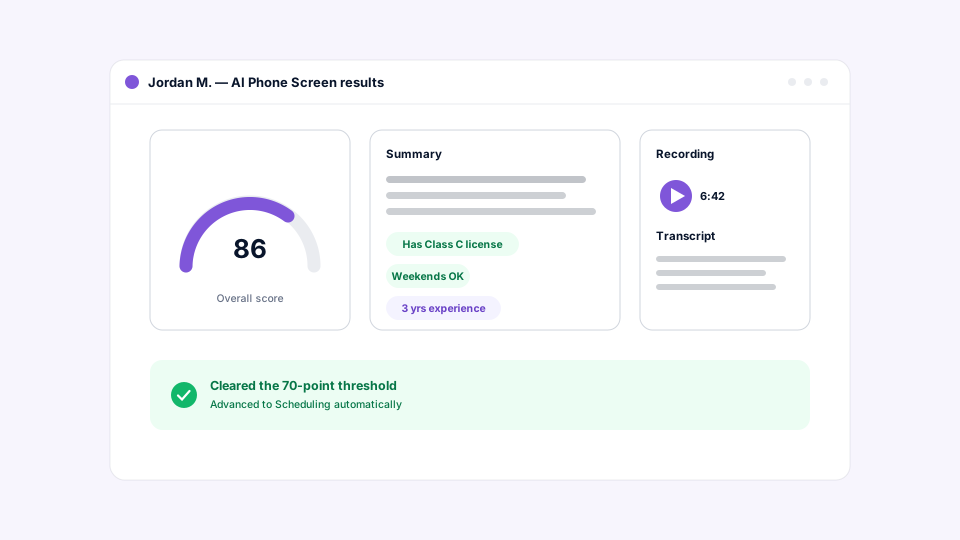
When the AI Recruiter completes a call, the scored summary, the full transcript, and the recording appear on the candidate’s profile. Reviewers can read the summary in seconds, check the transcript for a specific answer, or listen to the recording when tone matters.
This is what a traditional ATS has never had: visibility into how a screen was actually conducted. A legacy system can record that a candidate was screened and rejected; it can’t show what was asked or what was said. With every call transcribed and scored the same way, hiring leaders can compare candidates fairly, coach on question design, and answer the question “why was this person advanced?” with evidence rather than memory. Stage-level notifications round out the stage, sending SMS and email on entry or after inactivity so candidates know the call is coming and don’t stall in the stage.
How does an AI phone screen compare to manual phone screening?
Manual phone screening reaches the candidates a recruiter has time to call, during business hours, in the recruiter’s language, with questions that vary from call to call. An AI phone screen reaches every applicant, at any hour, in more than 10 languages, with the same questions and the same scoring every time.
The gap shows up first as speed: a candidate screened within minutes of applying is still interested, while one who waits three days for a callback has often moved on. It shows up second as consistency, since two recruiters rarely run the same screen the same way, and a large team drifts further. And it shows up third as coverage, because the applicants who never got a call are invisible in a manual process and fully screened in an automated one. LaRae, an HR administrator at Express Package, an Amazon Delivery Service Partner, saw candidate engagement rise from around 30 percent to 80 percent and her daily manual HR work fall from roughly four and a half hours to about thirty minutes after adopting HappyFleet’s AI Recruiter, as detailed in her case study. For the category-level comparison, read AI Recruiter vs. traditional ATS: what’s the difference?
Screen every applicant, not just the ones you had time to call
HappyFleet is one platform with two connected AI products: the AI Recruiter, which conducts automated phone-screening interviews with every applicant in more than 10 languages, 24 hours a day, and produces a scored summary of fit and eligibility, and the AI ATS, which chats with candidates over text, books interviews through its own built-in scheduler, and captures candidate data automatically at every pipeline stage. The AI Phone Screen stage is where the two meet: the AI Recruiter runs the interview, and the AI ATS moves the candidate forward based on the score, straight into scheduling, paperwork, or a human review. One hiring team reported saving 10 hours per week on screening after adopting the AI Recruiter, as described in this case study. It’s built for frontline and hourly workforces, where volume and speed decide who gets hired.