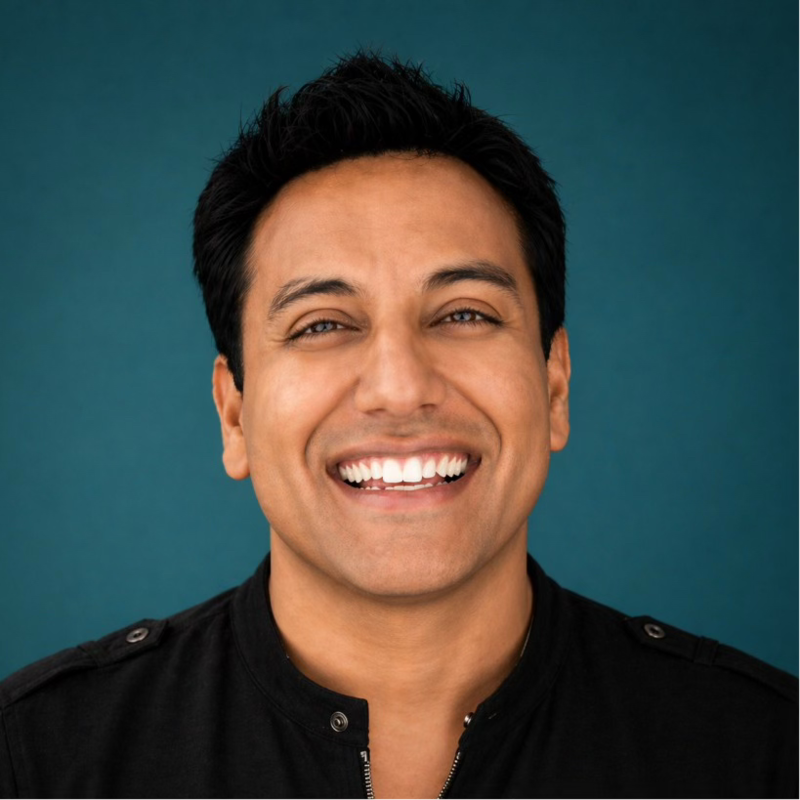
Kimberly Hoffmann didn’t come to the Amazon DSP program without logistics experience. She came with a lot of it — just not the kind most people expect.
For years before launching her DSP in Madison, Wisconsin in September 2020, Kim was the Director of Operations for a company that provided dental screenings and treatment for the military across 30 states. The job required recruiting dentists, dental assistants, and hygienists, shipping equipment to National Guard Reserve facilities, managing complex cross-state logistics, and operating as a subcontractor to a larger prime contractor. Sound familiar?
“Very similar relationship — when they said jump, we said how high,” she says, drawing the line directly to her current DSP relationship with Amazon. “The only difference is now I’m employing drivers rather than recruiting dentists and hygienists.”
In Episode 5 of the HappyFleet podcast, Kim joined host Robert Fierro to talk about her unconventional path into the DSP world and how five-plus years of managing people, processes, and high-stakes logistics prepared her for it.
Book a demo and start your free trial today →
How She Got In
Kim’s entry into the DSP program in 2020 is a study in acting on opportunity without overthinking it. A friend shared an article from Fortune 500 magazine about the program, suggested it would be a good fit, and Kim pulled up the application. The questions — about company values, about logistics experience — felt natural. She submitted it.
When she got called for an interview, her reaction was to finally start doing research on what the program actually was.
“I interviewed, then I got selected and I was like, now I have a decision to make.”
She did the homework, made the call, and launched in Madison that September. Since then she’s transferred to a new station, currently running 40 to 45 routes in steady state, with Prime as the next growth target on her list.
Why Technology Found Her
The timing of Kim’s technology adoption matters. She came to HappyFleet specifically in advance of a station transfer — a moment when she knew volume was about to increase and that doing things manually wasn’t going to scale.
Her frustration with the old approach is clear.
“Anyone can put anything on a resume. But let’s talk about the things that matter. Can you drive at night? Are you okay with the stop count? What’s your attendance history?”
A resume doesn’t surface any of that. Conversational recruiting software that asks the right questions upfront does — and for frontline hiring at this volume, an applicant tracking system for frontline workers built around those questions changes what’s possible before a human ever picks up the phone.
For Kim, it’s not just about finding good candidates faster — it’s about not wasting time on candidates who were never going to work out.
“We’re not wasting time with applicants that aren’t going to be a fit. It’s screening that out for us.”
That’s the core promise of high volume recruiting software done right: fewer bad hires, not just more hires.
The same instinct drives her approach to operations more broadly. She’s now advising a close friend — the original owner of the military dental company — who is restarting the staffing side of that business. Kim’s first recommendation: look at technology platforms that eliminate the manual filtering work before a single conversation happens.
What the Military World Taught Her About Last Mile
There’s an interesting overlap between the dental staffing work and DSP operations that Kim doesn’t fully surface in the interview but implies throughout. Running logistics for dental events across 30 military facilities — coordinating people, supplies, and equipment to locations that often don’t have standard addressing — is genuinely harder than it sounds.
“Fort McCoy here in Wisconsin is a great example,” she says. “The joke is they dropped the addresses on the ground and just picked them up and put them on buildings. There’s no system. You just drive and ask people until you get there.”
It’s a challenge that turns out to mirror some of the real-world conditions her delivery drivers face — gates, intercoms, incomplete addresses, properties without clear access. The difference is scale: with drivers making 150+ stops a day, there’s no time to navigate by instinct.
Book a demo and start your free trial today →
What carries over is the mindset: adapt, problem solve, keep the team moving. Whether you’re getting a dental team into a National Guard facility or a driver to a delivery that won’t scan, the job is the same — figure it out and don’t drop the ball.
Five-Plus Years In
Kim’s tenure puts her in a different conversation than newer DSP owners. She’s seen the program evolve, lived through a station transfer, and is now actively planning for Prime. The fact that she’s investing in operational technology ahead of the growth — not as a reaction to problems but as preparation for scale — says something about how she thinks.
Not every DSP owner reaches for new tools proactively. Kim does. And that instinct, built over a career of running complex multi-state operations, might be the through-line connecting dental logistics to Amazon deliveries to whatever comes next.
This post is based on Episode 5 of the HappyFleet podcast. Kim Hoffmann is a DSP owner in Wisconsin and a HappyFleet user.
#AmazonDSP #LastMileDelivery #DSPHiring #HRTech #AIRecruiter #DSPOwner