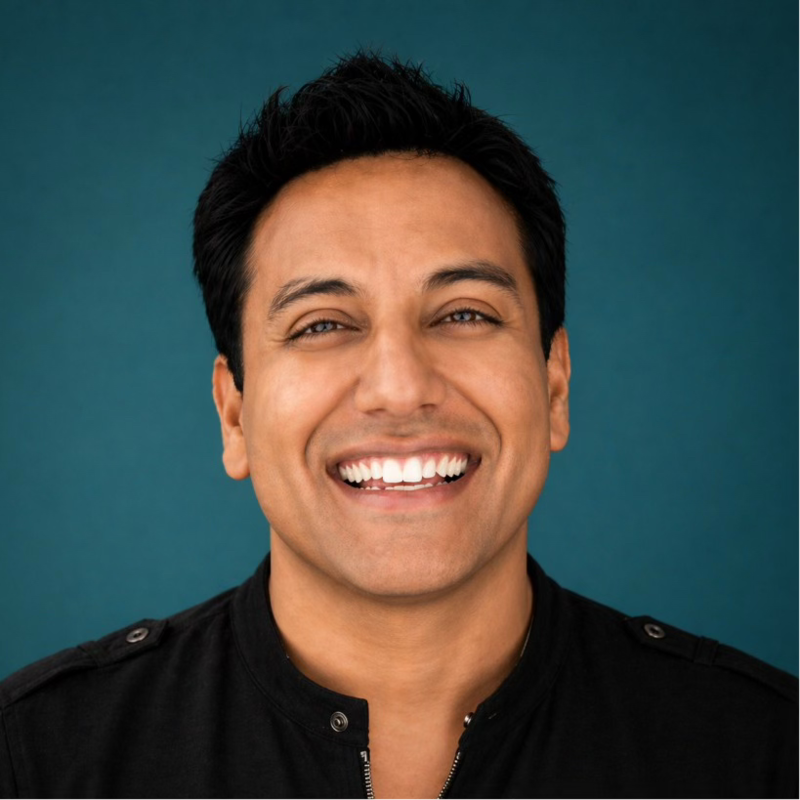
Rafael Garcia graduated from law school in Venezuela, ran a car wash that was servicing 30 to 60 hand-washed vehicles a day, and watched the economy deteriorate until emigrating became the obvious next move. He came to the United States, worked as a foreign legal consultant for a pharmaceutical company, decided law wasn’t what lit him up, and eventually found his way to the Amazon DSP program in 2019.
Seven years later, Gallo Logistics operates 35 routes in Florida, has helped multiple employees go on to launch their own DSPs, and is run by an ops manager who came up through the ranks and is now waiting on his own contract. Rafael describes the business as the most exciting project of his career — more than the car wash, the remodeling company, or the food business he ran before it.
In a recent episode of the HappyFleet podcast, Rafael sat down with host Robert Fierro for a detailed conversation about building culture, fighting insurance, and using AI tools he never expected to be using.
Starting From Zero, By Design
When Rafael launched Gallo Logistics, he made a deliberate choice: no manager hired from the outside. He wanted to give people the opportunity to grow into leadership from within the company, so he could see who was actually capable — not who looked good on a resume.
“You sometimes have a lot of prejudice in your head and you’re trying to be as subjective as possible, but sometimes people are very fast to judge. It’s amazing the persons that maybe you didn’t expect that stand out and show you they are the most capable and relentless and willing to go the extra mile.”
For the first two months, he was doing everything himself. Hiring, onboarding, processing payroll, handling insurance claims, going to the station, loading vehicles with drivers, tracking the day as packages went out. He was also regularly running routes himself because he didn’t have enough drivers. That ground-level experience — understanding what drivers actually face on the road — became the foundation for how he hires and manages today.
After two months, he hired an HR manager. After five months, he promoted two of his best, most proactive drivers to dispatcher roles. The ops manager who runs the business now came up through that same path.
Book a demo and start your free trial today →
Insurance Is the Hardest Part
Ask Rafael what the most difficult part of running a DSP is, and the answer is immediate: insurance.
“Insurance. I know it’s a short answer, but it’s the truth.”
Florida is a uniquely brutal market for auto insurance. Rafael describes it as a cultural phenomenon — every minor accident, regardless of fault or injury, becomes a major claim. “Every little tiny bitty accident turns into a big claim.” Attorneys are everywhere; billboards, Spotify ads, radio. The litigation culture has pushed premiums to levels that can genuinely threaten a DSP’s viability.
His response is to make safety the loudest conversation in the building. He stretches with his team every morning — partly to warm up physically, partly to make them aware of their bodies and reduce injury risk, but mostly as a ritual that emphasizes: we are serious about this.
“I tell them, listen, I really appreciate you guys and I hope you appreciate the job you have. If you want to make sure this company is still in operations two, three years from now, you have to be very careful when you’re driving.”
He’s been on both sides of the accident equation — at fault and not at fault. Even the not-at-fault incidents are painful when the other party doesn’t carry enough coverage to total the loss. Insurance companies sometimes advise letting it go rather than pursuing the gap. In Florida, that advice comes often.
Accountability as a Culture
Rafael uses the word “accountability” before Robert does. It’s not a management technique he applies to underperformers — it’s the operating principle his entire culture is built around.
Weekly performance metrics go to every driver, not just the ones struggling. Everyone knows the expectations. Everyone knows what consequences look like. And everyone hears the conversations that happen when someone is suspended or removed. “They talk to each other. They know: this guy was suspended because he did X and Y. That conversation among them also helps them understand there’s consequences.”
His rule: one mistake is a mistake, two is a mistake — three is his mistake for not having fixed it. The third time the same thing happens, he missed something in coaching or culture that he needed to address.
He also ties his management team’s incentives directly to scorecard performance, for the same reason Tony Razza mentioned in an earlier episode: you need managers to feel the pain when metrics slip, not just the owner.
Building Software Without Being a Developer
Rafael has spent the last two to three weeks using Base 44, a no-code AI-powered app builder. He is not a tech person by self-description. He is absolutely using it to build tools.
What he built: an app that reads two documents — his daily route assignments and his driver staging information — and automatically composes and sends each driver their daily dispatch email. Before this, someone was manually cutting, formatting, and sending individual emails every single day. Now the app reads the documents and handles it.
“For me, that’s been a game changer. With Base 44 you can do anything you want. It’s incredible.”
He’s not done — there are still tweaks to work through — but the direction is clear. Any administrative task that’s manual, repeatable, and error-prone is a candidate for automation.
His broader software stack includes When I Work for scheduling (he gives drivers a flexible availability model — no fixed schedule, just block the days you can’t work), Cortex for Amazon’s internal performance data, WhipAround for AI-powered vehicle inspection and damage tracking, and Nine Minute App for weekly driver coaching notifications based on scorecard data.
The coaching app is worth highlighting: it pulls performance metrics from Cortex weekly and sends individual coaching notifications to each driver, letting them know exactly where they stand. “Most of my drivers are really interested in knowing what they’re doing wrong. If they have a tool where they can see their performance every single week and understand where they need to improve, they will do it.”
Before the tool, this was done manually — exporting data from Cortex, organizing it, and distributing it by hand. The tool didn’t change the frequency; it changed how much human time was required to do it.
What Success Looks Like
Rafael’s definition of success is about other people’s trajectories.
His original HR manager — the one who started with limited experience but learned quickly — went on to apply to the DSP program with Rafael’s support and was accepted. His current operations manager went through Amazon’s Road to Ownership program and was awarded a contract. He’s waiting on a location.
“For me, that was the most fulfilling day — one of the most fulfilling parts of my business. Helping people grow and achieve their goals.”
He started the company wanting to give people the opportunity to rise within it rather than hiring managers from outside. Seven years later, the people who came up through that structure are now operators themselves. That’s the legacy he’s building.
Book a demo and start your free trial today →
The Story That Stays With Him
When asked about the strangest or most memorable moment of running a DSP, Rafael doesn’t reach for a funny anecdote. He goes somewhere more serious.
He remembers reading about a case in Miami where armed robbers entered a UPS vehicle, held a gun to the driver’s head during a highway chase, and the driver was killed in the process. It’s not something that happened to Gallo Logistics. But it’s something that never left him.
“Those types of situations really scare me and that I try to avoid. You can never know what’s going to happen. You have to be very aware of your surroundings.”
There’s a lot of value in the packages his drivers carry. The job looks routine from the outside. It isn’t always.
This post is based on the HappyFleet podcast conversation with Rafael Garcia of Gallo Logistics, an Amazon DSP based in Florida.
#AmazonDSP #LastMileDelivery #DSPHiring #HRTech #AIRecruiter #DSPOwner