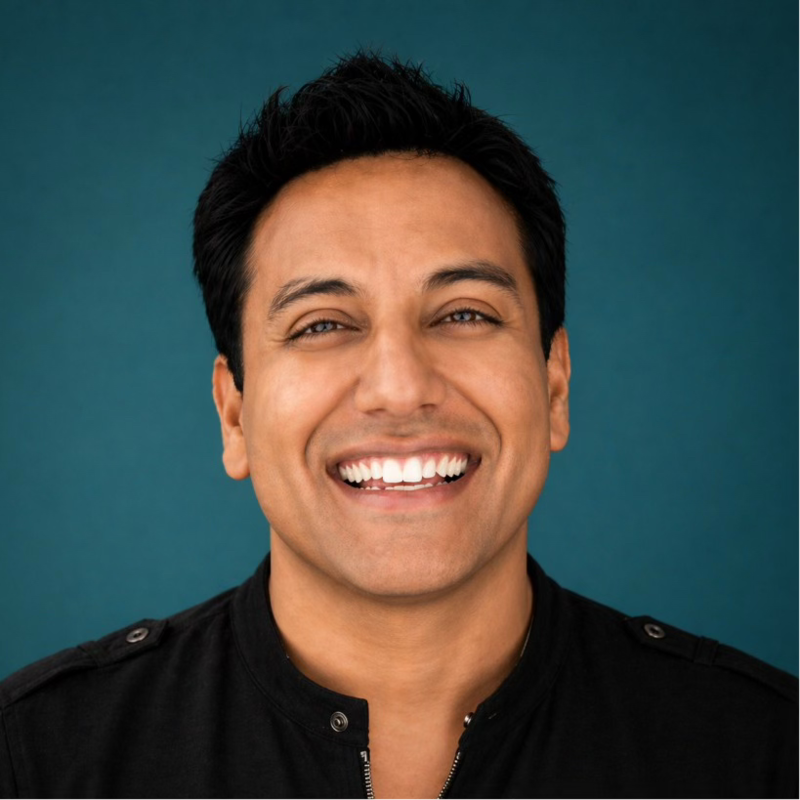
Nokia Crane named his logistics company after himself. Not because he couldn’t think of anything else, but because it was real — his name, his business, his reputation on the line every day.
“Nokia Logistics — I just came up with my name and logistics,” he says with a laugh.
But there’s nothing casual about how he runs it. Five-plus years into operating a DSP in Georgia through Amazon, Nokia has built a company around a simple idea: if you take care of your people and create opportunity in your community, the business follows.
In Episode 6 of the HappyFleet podcast, Nokia joined host Robert Fierro for a wide-ranging conversation about building from the bottom up — from bank manager to UPS seasonal worker to FedEx operations manager to DSP owner — and what he’s learned about leadership, safety, and keeping people around.
Book a demo and start your free trial today →
A Career Built on Understanding the Work
Nokia’s resume is a lesson in knowing every level of the business before you run it. He drove for UPS during holiday seasons alongside his cousin, who retired from the company. He moved into bank management for six years. He became an operations manager for a FedEx DSP, where he understood dispatching, van loading, and how the contractor model works from the inside out.
When he applied for an Amazon DSP contract, his application stood out because he could speak the language at every level.
“There’s nothing that they couldn’t do that I didn’t do,” he says of his drivers. “Me coming in and relating with the drivers — I was already in their world.”
He was selected out of what he estimates was over 100 applicants. The combination of operations experience, driver-level understanding, and management credibility gave him a foundation that most new DSP owners spend years trying to build.
What He Built It For
Nokia didn’t get into the DSP program chasing a payday. He got in because he wanted to be the kind of person in his community that people could point to when someone needed a job. That mission shapes everything — including how he approaches driver recruiting software and hourly hiring. For Nokia, the tools are in service of the people, not the other way around.
“If somebody need a job or something happened to somebody, they could rely on me to put them in position to make some money.”
That’s not a tagline — it’s the operating philosophy. When drivers come to him with family issues, financial stress, or mental health challenges, Nokia works with it rather than around it.
“Everybody wants to feel like they’re being cared for, they’re understood.”
He also runs a school program for his employees. If a driver doesn’t have a trade skill and wants to go back to school, Nokia encourages it — even if it means they eventually leave.
“Use me to make yourself better. Even if you’re not trying to move up in the company with me, I want you to be able to get a trade, pay for your college.”
Three of his managers have been nominated for DSP contracts of their own, though none have been approved yet.
Safety, Insurance, and the Things That Keep You Up
Nokia is direct about what worries him most: safety. He prays in the morning that his drivers come back safe. He prays in the evening that they made it home. It’s not performative — it’s how he starts and ends his day.
The practical reason intersects with the spiritual one. Georgia has some of the highest commercial auto insurance rates in the country, comparable to California. A single significant accident can raise premiums enough to put a small DSP underwater. Nokia has experienced this firsthand — an accident last year that resulted from a manager sending a driver out against Nokia’s specific instruction caused his insurance to spike.
The lesson he took: your culture around safety isn’t a policy you post on a wall. It’s a decision your managers make in the moment when you’re not there. If they don’t feel that safety decisions are theirs to own, you’ve built the wrong culture.
His fleet is 90% electric, which has helped on cost. New hires start on the remaining gas vehicles.
“I want them to learn how to navigate the Amazon way of driving before I put them in an electric van — those are expensive, and if they damage them, it’s a lot of money coming out your pocket.”
How He Stays Grounded
Running a DSP that operates 360 days a year, requiring availability for 12 to 14 hours a day, takes a mental toll that Nokia is honest about. He gets massages. He meditates twice a week — a practice he started in January and has found genuinely useful.
“When I feel like I’m just overwhelmed, I stop, take 30 minutes, sit and listen to meditation, relax my mind.”
He goes to church. He tries not to stress about what he can’t control.
“My mom always taught me: stop worrying about stuff you can’t control because you can’t control it. It is what it is. Control the controllable.”
He talks about having attended every one of his kids’ events — four daughters, ranging from 13 to 32 — as something the DSP program made possible in a way a traditional job never would have. The flexibility of ownership, even constrained ownership, was the point.
“That’s what Amazon did do for me. I can never thank them enough.”
Book a demo and start your free trial today →
On AI, Technology, and the Jetsons
Nokia describes himself as a technology person — someone who had iPhones when they launched and worked for T-Mobile and AT&T early in his career. He’s been using My DSP, an AI-based app that translates performance data, scorecard updates, disciplinary actions, and incident reports directly to driver phones, eliminating a layer of manual communication.
But his broader view on AI is worth hearing:
“When we was young, we saw the Jetsons and never thought we’d see half the stuff they showed us. But here we are.”
He sees the people who resist AI as the ones who will get left behind, same as the people who wouldn’t adopt smartphones. The ones who get curious early understand where things are going.
His practical wish: one unified fleet management software suite that handles everything — no more juggling five different platforms.
“Once I find something that can really give me an autopilot, that’s the one I really would love.”
The Craziest Story
Nokia closes with a memory from his early days in Michigan, where he’d never really driven in snow. A driver got stuck on a hill. Nokia went with his fleet manager to pull them out. On the way down to attach the tow line, Nokia slipped on the ice and slid all the way down the hill to the stranded van.
He managed to latch the line. The fleet manager started pulling. As the van came up, Nokia was holding on like a zip line, feet scraping ice, unable to get traction, hauled back up the hill while his fleet manager laughed the entire time.
“He always jokes with me: ‘Hey, you want to go zip-lining again?‘”
It’s a small story, but it captures something real about the job — the chaos, the physical reality, the moments that bond a team together. Nokia remembers it fondly.
This post is based on Episode 6 of the HappyFleet podcast. Nokia Crane is the owner of Nokia Logistics, an Amazon DSP based in Georgia.
#AmazonDSP #LastMileDelivery #DSPHiring #HRTech #AIRecruiter #DSPOwner